The Adoption Gap: Why Well-Built Programs Fail (And It's Not What You Think)

Updated: May 23
You built it right. The dashboard is clean. The automation works. The data is solid.
But nobody uses it.
Or worse, people build workarounds around it.
So you assume the problem is the tool. Or the people. Or the process.
Usually, it's none of those.
The Paradox Every Leader Knows
You implement controls. You deploy automation. You collect data. You generate reports.
Leadership sees all the reporting.
But no action is taken.
This isn't a technical problem. It's a system problem.
And it happens everywhere, not just in security, but in operations, HR, finance, compliance, data engineering. Anywhere you're trying to get people to actually use what you've built.
Three Root Causes (That Have Nothing to Do with Tools)
1. Fragmented Ownership
Imagine three departments (safety, equipment, fleet management) all responsible for the same process. Each has different rules. Each makes different decisions about what's compliant.
Now you have to present data showing conflicting information: "To safety, this is compliant. To equipment, it's not."
Leadership sees the contradiction and stops trusting the data entirely.
The problem: When everybody's involved but nobody's responsible, you get three different truths. And data becomes useless.
2. Poor Data Architecture
In one tool, a severity level is called "high." In another, it's "critical."
Same thing, different words.
But to leadership: "I don't know which one to believe."
I've seen this with something as simple as headcount. Finance counts based on who got paid that month. HR counts based on who's scheduled. Finance says 50. HR says 47. An executive sees both numbers and asks: "Which one is right?"
Nobody can act because nobody knows if the data is accurate in the first place.
The problem: When definitions aren't shared, data doesn't mean anything.
3. Low Tool Adoption
I automated a report that was taking 30-45 minutes every week. Beautiful dashboard. Fully automated. Ready to go.
Adoption: 10 views. All me.
People kept doing the manual spreadsheet.
When I asked why, they said: "I know, but I like this way better."
They didn't need a better tool. They needed to understand why the change mattered. And they needed to be part of the solution.
The problem: Adoption isn't a tool problem. It's a design problem.
Data Becomes Powerful When It's Trusted and Acted On
Here's the thing: you can't separate the quality of your program from the quality of your adoption strategy.
They're the same thing.
If people don't trust the data, they won't act on it. If they don't understand why they should change, they'll build workarounds. If ownership is fuzzy, nobody will take responsibility.
The best dashboard in the world is useless if nobody believes in it.
ADKAR: A Framework for Designing Adoption
I've looked at dozens of change management methodologies. Most are good. But one stands out for how it actually works in real organizations: ADKAR.
ADKAR isn't complicated. It's five stages:
Awareness — Do people know why change is happening?
Desire — Do they actually want to participate?
Knowledge — Do they understand how to do it?
Ability — Can they actually perform the change?
Reinforcement — Does the change stick?
The trick: you have to design for all five.
Most programs fail because they skip stages. They mandate compliance (Desire gone). They dump instructions in an email (Knowledge gone). They go live and disappear (Reinforcement gone).
When you think about adoption as a system, not a behavior problem, but a design problem, everything changes.
What This Looks Like in Practice
Awareness: Instead of "Surprise, we're changing this," you sit down with the team and explain why. Two-way conversation. They understand the reasoning.
Desire: You don't mandate compliance. You find out their why. What's in it for them? More productivity? Less busywork? More time for meaningful work? You find a champion, someone whose motivation aligns with yours.
Knowledge: You don't send a 10-page email with instructions. You show them. Interactively. You make it practical. You make it short (3-minute videos, not 30-minute trainings). And you make clear what "done" looks like.
Ability: You remove obstacles. You notice when the process is too complicated and simplify it. You practice with them. You create a safe space for mistakes.
Reinforcement: This is the part most people miss. You don't go live and disappear. You monitor adoption. You recognize and reward teams who are using it. You intervene quickly (without shaming) when old habits creep back. You embed the change in your culture and systems.
The Real Work Starts Monday Morning
When you go back to work, here's what to do:
Map where your people are in ADKAR. Are they unaware? Do they not care? Do they not know how? Can't do it? Or is it just not sticking?
Tailor your approach. Different teams are at different stages. HR might be embracing it. Safety might be skeptical. You don't use the same playbook for everyone.
Create a communication plan. Keep it simple. What is this about? Why are you getting it? What's next?
Identify and empower champions. Peer influence beats authority. Find people on your team who get it and amplify their voice.
Define success metrics. Not for you—for leadership. They care about outcomes: money, productivity, reduced risk. Show them how adoption connects to those outcomes.
Measure and reinforce. Monitor adoption signals. Recognize teams doing it right. Quick intervention when things slip. No shame, just curiosity: "Why did you decide to do that?"
What Confidence Actually Looks Like
When you get this right, here's what happens:
Leadership gets engaged and starts defending your work.
Teams stop second-guessing the data and actually escalate findings.
People know what they need to do and come to you less often (because everything's clear).
You stop playing defense and start playing offense, making your systems better instead of fighting to get adoption.
That's when the adoption gap closes.
The Bottom Line
You can't separate the quality of your systems from the quality of your adoption strategy.
They're the same thing.
Stop thinking about adoption as a behavior problem. Start thinking about it as a design problem.
When you design for ADKAR from day one, when you build awareness, desire, knowledge, ability, and reinforcement into your program, adoption stops being a struggle. It becomes inevitable.
Watch the Full Talk
I just released a 30-minute talk breaking down all of this with real examples from construction, HR, operations, and more.
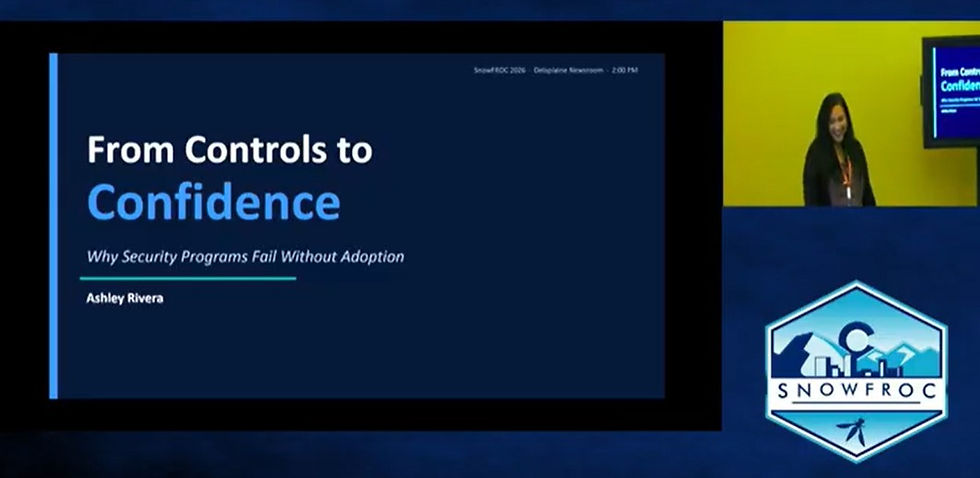
You'll learn:
The three root causes of program failure
How ADKAR actually works (it's more flexible than you think)
Real scenarios you can practice with
Actionable steps for Monday morning
Want to chat about your own adoption challenges? Reach out.
— Ashley
