You Don't Have to Have It Figured Out. You Just Have to Start.

A few years ago I recorded a short video for Transportation and Construction GIRL. I was a BI Developer at MCG Civil, which is now HEI Civil, trying to explain what business intelligence meant to people who had never heard the term.
I talked about data. About collaboration. About how it was okay not to know everything. About how I ended up in construction not because I planned it but because I wanted to help people and the work kept growing.
I was not a Director yet. I did not have a framework. I had not spoken at a conference or built an AI governance program or generated a million dollars in recurring ROI. I was just someone who had started with one report and kept going.
I am sharing that video here because I think it matters more now than it did then. Not because my role changed. Because the advice I gave then is still the truest thing I know.
Where I Am Now
Today I am the Data and Automation Director at HEI Civil, overseeing enterprise data strategy, automation, and AI governance across a multi-state operation. I also run A River of Data, an advisory practice serving founders, CFOs, and operators in construction, trades, and small-to-mid-size organizations.
The work generates over one million dollars in recurring annual ROI. We have eliminated more than 19,000 manual hours per year across three divisions. I designed a full AI governance framework my team has operated under for over twelve months, and I am now scaling it enterprise-wide for over 800 employees.
None of that was the plan. I came into construction to help people. The path revealed itself because I kept paying attention to the work and the impact, not the title.
That is exactly what I told the interviewer a few years ago. And I would say it again today.
Three Things I Would Tell Any Woman Entering This Field
Listen. Ask questions. Speak up.
You are surrounded by people with different perspectives. Experienced and new. Technical and operational. Everyone thinks differently and everyone has something to teach you.
Speak up when you have an idea. Especially when you think differently than everyone else in the room. That different perspective is not a liability. It is frequently the one that solves the problem nobody else could crack.
But also listen. You might be the one with the fresh take and you might also be wrong. Both things are fine. Ask questions anyway. Questions open doors. They signal curiosity. They lead to opportunities that are not posted anywhere.
You do not need to know everything.
This is the thing nobody told me in school.
I did not know how to build a dashboard when I started. I did not know how to organize data at scale. I did not know what BI even meant. But I was willing to learn. And that was enough.
People get stuck waiting until they feel qualified. Stop waiting. You are qualified if you are curious and willing to do the work. When I do not know something, I say so and then I go find out. That habit has opened more doors than any certification I have ever earned.
It is okay not to have your career figured out.
I am not where I thought I would be. Not even close. I came into construction to help people. I ended up building enterprise data infrastructure, designing governance frameworks, speaking at conferences, and founding an advisory practice.
None of that was on the roadmap. But when you pay attention to the problems you are solving, the people you are helping, and the impact you are having, the path reveals itself. Do not get hung up on where you are going. Focus on the work in front of you.
On Collaboration and Community
In that video I talked about my favorite part of the job being collaboration. Getting to work with people from safety, equipment, HR, finance, and operations. Learning how the entire construction industry works from the inside.
That is still true. What I understand now that I did not understand then is why it works. It works because of trust. Because of community. Because of mentors who believed in me before I had the track record to justify the belief.
I was lucky to have Laurie Morgan as that person early on. She gave me room to fail and room to learn, and that kind of investment compounds in ways you cannot predict. I think about it every time I mentor someone or sit across from a client who is trying to figure out where to start.
Surround yourself with people who are doing the work you want to do. Not just to learn the technical skills. To see how they think. How they frame problems. How they handle the moments when something breaks or someone pushes back. That is where the real education happens.
The Framework I Did Not Have Then
Here is what I know now that I wish I had known earlier: building something technically excellent is not enough.
Early in my career I automated a report that was taking someone 30 to 45 minutes every week. Clean dashboard. Fully automated. Ready to go. Adoption was ten views. All mine. People kept doing the manual spreadsheet.
I did not understand then that adoption is not a tool problem. It is a design problem. The moment a person decides whether to trust what you built is not determined by how good the tool is. It is determined by whether they understood why it mattered, whether they had any say in how it worked, and whether someone showed up after go-live to make sure it was actually sticking.
Change management is not a phase at the end of the project. It is a design discipline. When you understand that, everything about how you build changes.
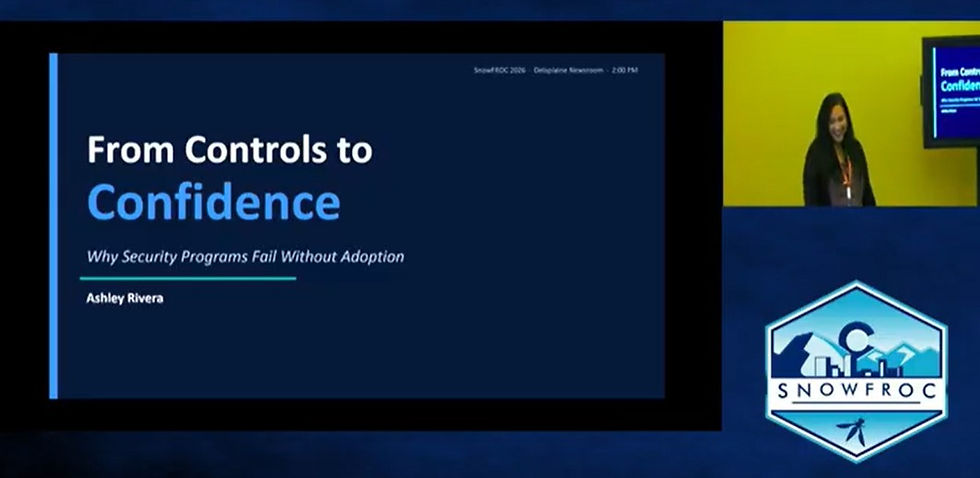
I go deeper on this in a separate post and a full talk I recorded on the ADKAR framework and what adoption actually looks like in practice. If you are building systems that people are supposed to use and they are not using them, that is where to start. Read it here.
The Industry Needs You in the Room
Here is what I know about being a woman in construction and data: you are not competing with anyone. You are complementing an industry that gets better when more kinds of thinking are applied to its hardest problems.
Women ask different questions. We think about collaboration differently. We approach problems with different frameworks. That is not a weakness. It is frequently what the room was missing.
The construction industry needs more women in BI, data, automation, and tech roles. Not because of a diversity checkbox. Because the problems are complex, the stakes are high, and different perspectives produce better solutions. That is not idealism. That is just how good problem-solving works.
If you are a young woman considering this field: do it. You will work with interesting people, solve real problems, and see direct impact. You will learn how entire industries work from the inside. You will grow in ways you cannot predict from where you are standing right now.
And you will not need to have it figured out to get somewhere that matters. You just have to start.